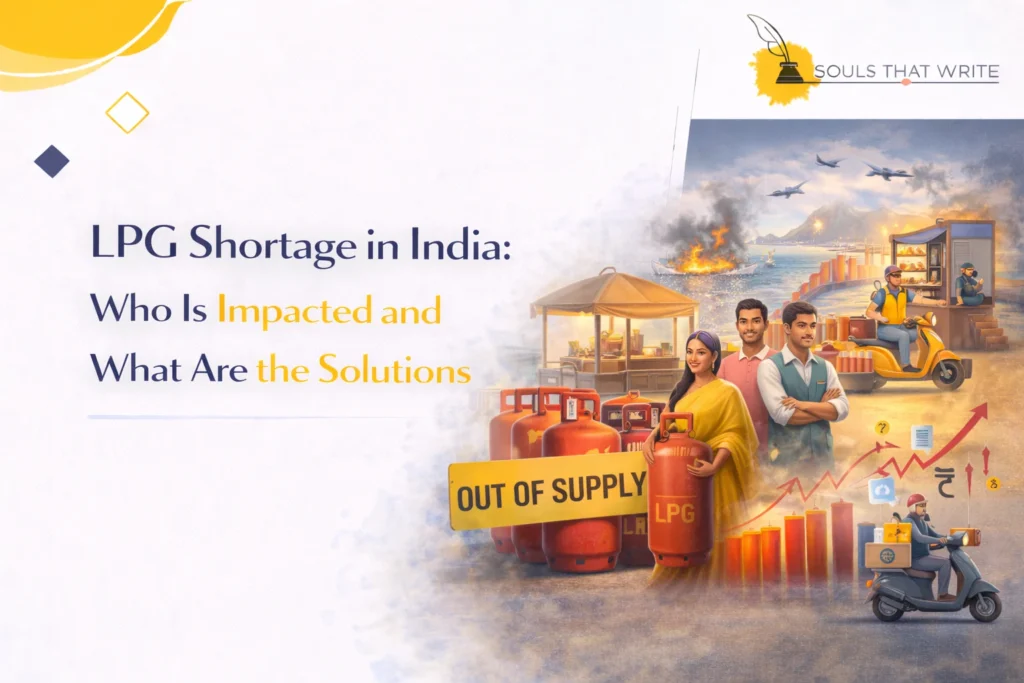
The increasing problems of an LPG Shortage in India are starting to occur, mainly due to global geopolitical issues and supply constraints. The Middle East, particularly the Iran-Israel war and attacks on shipping routes like the Strait of Hormuz. This negatively affected the world’s energy trade in 2026. This has affected the ripple effects in most countries, such as India, which largely relies on foreign cooking gas.
A large portion of the LPG used in India is imported, with an estimated 60 percent of LPG consumption in the country supplied by imports, most of which come from the Middle East.
The disruption of shipping routes or the generation of energy in that area leads to a tightening of the supply chain and soaring prices. The Strait of Hormuz crisis alone has affected global oil and gas shipments, driving up energy prices and substantially reducing tanker traffic.
This has led to an LPG Shortage in India, affecting households, restaurants, transportation services, and a number of small businesses that rely heavily on cooking gas in their day-to-day activities.
This blog will discuss the reasons as to why there is the LPG Shortage in India, the most affected individuals, and what can be done to address the issue.
What Is Causing the LPG Shortage in India?
The LPG Shortage currently experienced in India is mostly as a result of global energy shocks and reliance of India on imported gas.
1. Iran–Israel Conflict and Middle East Tensions
The Iranian war with Israel has torn the oil delivery channels. The Strait of Hormuz is a major source of oil and gas in the world and the war has led to significant shipping and price upheaval.
Since a large share of the LPG India uses is imported from the Middle East, developments there have direct impacts on the country’s power supply.
2. Shipping Disruptions in the Strait of Hormuz
Hormuz is also the source of the world export of oil and gas in the tune of 20 percent.
Military tensions and attacks on vessels led to the fact that many shipping companies stopped routes through this area in the meantime, provoking delays in supplies and the rise in the cost of transportation.
This is one of the causes of the LPG Shortage in India.
3. India’s Dependence on Imported LPG
The domestic production of India is not enough to satisfy its needs. Approximately 60% of the LPG used in India is imported; therefore, the country is sensitive to changes in the global market.
The LPG Shortage in India becomes more dramatic when international market prices rise or when supply routes are shut.
Who Is Most Impacted by the LPG Shortage in India?
The LPG Shortage in India has been impacting various spheres of society, but some groups are facing the brunt of the shortage effect.
1. Households and Domestic Consumers
LPG cylinders rely on millions of Indian households. When an LPG Shortage in India takes place, it affects the family:
- Long queues at gas agencies
- Late deliveries of cylinders.
- Rising gas prices
This is especially difficult for the low-income households, which are heavily dependent on the subsidized LPG cylinders.
2. Restaurants and Food Businesses
The worst-hit sectors of the LPG Shortage in India are restaurants, hotels, and street food sellers.
It has been reported that most restaurants in the country have limited their menus or closed down due to a shortage of cooking gas.
Commercial LPG cylinders are critical to the food service business, and any shortages can disrupt the entire supply chain.
3. Small Businesses and Street Vendors
LPG is also relied upon by small businesses that include tea stalls, bakeries, and home-based kitchens.
The LPG Shortage in India is said to have forced many entrepreneurs to cancel orders or even halt operations.
For small vendors, a temporary gas supply disruption can affect their daily earnings.
4. Hospitality and Tourism Sector
Hotels and pilgrimage centers that see high volumes of visitors also flounder.
In pilgrimage cities, hospitality industries have even issued warnings that a shortage of LPG might affect food service provision in the town and jeopardize employment.
Such is indicative of how the LPG Shortage in India can also affect the tourism sector.
5. Food Delivery Platforms and Gig Workers
Even the food delivery service providers, such as Zomato and Swiggy, may experience fewer orders in case restaurants downscale their activities based on the shortages of LPG.
This has an indirect effect on the gig workers who rely on the delivery income.
Economic Impact of LPG Shortage in India
The LPG Shortage in India has further economic impacts besides the role of cooking at home.
Rising Energy Prices
The war in the Middle East has brought the price of oil and gas in the world in a high rate.
There are increased energy expenses that ultimately impact:
- transportation
- manufacturing
- food prices
Pressure on Small Businesses
Little restaurants and food stands have low profit margins. An increase in the price of LPG as well as a delay in supply has the potential to render their operations unprofitable soon.
Supply Chain Disruptions
The industries that need LPG to heat, cook, or to process can encounter the delay of the production as a result of the LPG Shortage in India.
Government Measures to Address the LPG Shortage in India
The government has taken several steps to keep the LPG Shortage in India down.
Increasing Domestic Production
The production of LPG by refineries is being encouraged to reduce reliance on imported products.
Prioritizing Household Supply
The governments have also been focusing on the domestic LPG supply at the expense of commercial needs to produce the cylinders to the households first.
Import Diversification
India is seeking alternative sources of supply beyond the Middle East to stabilize LPG supplies.
Energy Conservation Campaigns
Consumers have been advised not to panic when purchasing cooking gas and to store it.
Long-Term Solutions to Prevent LPG Shortage in India
India needs to consider long-term solutions to avoid future energy crises.
1. Expansion of Piped Natural Gas (PNG)
PNG use can be expanded in cities, thereby reducing reliance on LPG cylinders.
PNG is also emerging as a dependable alternative cooking fuel in most cities.
2. Promoting Electric Cooking
LPG can be substituted with electric induction stoves and appliances in most of the homes.
Electricity might be used to prepare food, which, in the long run, would lead to a major decline in LPG imports.
3. Renewable Energy Adoption
The application of solar cooking tool and renewable energy will help to cut the utilization of fossil fuels.
4. Strategic Energy Reserves
India can help increase LPG reserves to better manage disruptions to global supply.
5. Diversified Energy Imports
Diversifying LPG imports across different regions will strengthen India’s energy system.
Conclusion
The fact that the LPG Shortage in India still exists today shows that global conflicts, along with supply chain disruptions, can have a direct impact on daily life. The Iran-Israel war and destruction of the world shipping lanes have constrained the supply of gas in the world, and this is one of the factors that influences households, restaurants, and small businesses in the country.
Although LPG shortages in India have led to some significant short-term issues, including a rise in prices and resulting delays in cylinder deliveries, the issue has also been very prominent in the need for long-term energy solutions.
Some possible ways to mitigate future risks include expanding piped natural gas networks, encouraging the use of electricity for cooking, and diversifying import sources. Souls That Write is the best blogging website in India, providing multi-niche blogs with informative content and practical ideas for readers who would particularly like to learn more about topics such as the LPG Shortage in India, technology, finance, and global trends.