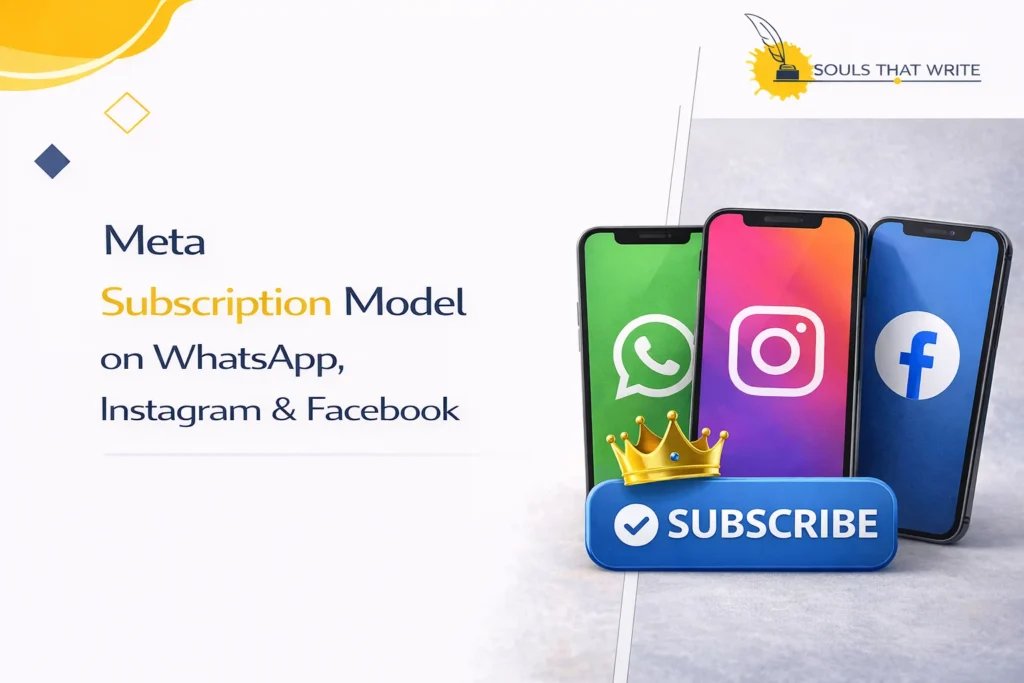
Over the years, Meta’s business model has been dependent on advertising. Applications such as WhatsApp, Instagram, and Facebook had been free for users, but the Meta Subscription Model monetized attention by targeting them with ads. Nevertheless, that model is currently facing pressure on both sides, including increased privacy legislation, restrictions on ad tracking, demands from creators, and evolving user behaviour.
Against this background, Meta Platforms is considering launching a subscription service across its most popular platforms, including WhatsApp, Instagram, and Facebook.
This possibility will change the interaction pattern of billions of individuals with social media. But what is Meta planning, why at this moment, and how will Meta Subscription Model impact users?
Let’s break it down.
Why Meta Is Considering a Subscription Model Now?
The interest in subscriptions at Meta does not happen overnight. It is a response to shifts in the structure of the digital economy.
1. Advertising Growth Is Slowing
The growth of digital advertising is no longer as high as it used to be. Ads have been fragmented by competition from platforms such as TikTok, YouTube, and other emerging AI-driven ad formats.
2. Privacy Regulations Have Changed the Game
Apple’s App Tracking Transparency (ATT) privacy rules, the GDPR in Europe, and other privacy regulations have limited Meta’s ability to profile users and serve targeted ads. This has directly influenced the efficiency of ads and the predictability of revenue.
3. Creators Want Stable Income
Creators also prefer stable incomes over relying on algorithm-driven engagement and advertising revenue. Subscriptions provide a more reliable foundation for the creator economy.
4. Users Are Willing to Pay for Better Experiences
In any industry, there is a willingness to pay by:
- Fewer ads
- Better privacy
- Exclusive features
Meta perceives this change of behaviour as an opportunity.
What a Meta Subscription Model Means?
Before starting, it is necessary to define one thing:
Meta does not intend to turn WhatsApp, Instagram, or Facebook into paid-only platforms.
Rather, the subscription plan will be:
- Optional
- Feature-based
- Tiered
There will be free versions, but paid subscriptions will add extra features.
WhatsApp Subscription Model: What’s Being Tested
WhatsApp has never been a big ad or monetisation business at the consumer level. That is slowly evolving.
Current Direction
Meta is also experimenting with and launching WhatsApp Business subscriptions, which regular users do not pay for on a daily basis.
Possible WhatsApp Subscription Features
- Business advanced tools.
- Individualized branding and verified business profiles
- Improved customer interaction analytics
- Priority customer support
WhatsApp is probably free to ordinary users, although there will be premium services like:
- Several improvements on devices
- Advanced privacy controls
- Cloud storage extensions
Might later be available on a subscription basis.
Instagram Subscription Model: Creators at the Center
Meta’s subscription ambitions are most evident on Instagram today.
Creator Subscriptions (Already Live in Some Regions)
In exchange, Instagram enables creators to provide paid subscriptions to their followers in exchange for:
- Exclusive posts and reels
- Subscriber-only stories
- Live sessions
- Badges, special interactions
This model is designed to:
- Minimize dependency on ads by creators
- Promote niche communities
- Enhance creator revenues
Future Instagram Subscription Possibilities
For general users, Meta could introduce:
- Ad-free browsing tiers
- Enhanced reach for posts
- Professional advanced analytics
- Customisation tools
Instagram subscriptions will expand, but will not replace the free experience.
Facebook Subscription Model: Reinventing a Mature Platform
Facebook faces another problem: a saturated user base and declining engagement among certain segments of the population.
What Meta Could Offer via Facebook Subscriptions
- Ad-free news feeds
- Improved privacy and editorial features
- Premium group tools
- Page management capabilities of businesses
Subscriptions would provide more visibility, moderation, and analytics to businesses and community managers.
Will Meta Offer an Ad-Free Subscription?
Among the most popular options, there are ad-free subscriptions.
In Europe, meta has already tried ad-free paid options as required by regulations. This is an indication that there is a high probability that:
- Users can have the option of paying to eliminate advertisements
- Advertisements will still be observed by free users
- This forms a two-revenue approach: advertisements + subscriptions
How the Meta Subscription Model Impacts Everyday Users?
The implementation of a subscription model across Meta Platforms marks the beginning of a shift in how users use social media in their day-to-day lives. Although this primary promise is that platforms such as WhatsApp, Instagram, and Facebook will remain free. The concept of subscriptions changes user behaviour, expectations, and digital habits.
The following will be a clear summary of what this shift implies to the normal user.
1. Free Users Will Still Exist, But With More Trade-Offs
The biggest myth is that social media will become a paid platform. That’s not the case. Free access will remain, but the experience gap between free and paid users will likely widen.
In the case of free users, this may imply:
- More common or more prominent advertisements
- Reduced sophisticated privacy settings
- Lack of access to quality features
- Minimised content prioritisation
Simply put, free users will not lose access, but they will experience increased friction over time.
2. Paid Users Get a Cleaner, Less Distracting Experience
For subscribers, the first advantage will be reduced noise.
The paid plans are likely to provide:
- Ad-free or ad-light feeds
- Cleaner interfaces
- Minimized scrolling or messaging
- Greater visibility of content
This ensures a less stressful and more purposeful experience on social media, particularly to users who are overwhelmed with endless advertisements and suggestions.
3. Privacy Becomes a Paid Advantage
There is one small but significant change in privacy policy.
Users will possibly benefit from subscriptions:
- Enhanced data controls
- Less tracking on advertising
- Better understanding of the use of data
- Anonymity choice or visibility
This creates a new reality: privacy is a premium feature, not a default setting.
4. Everyday Interaction Patterns May Change
Subscriptions affect the behavior of individuals over the internet.
For example:
- Paid users can spend less time doom-scrolling
- Discussions can be more specific
- There is a possibility that content consumption will focus on quality instead of quantity
This may alleviate the kind of constantly online pressure many users experience nowadays.
5. Social Media May Feel Less Addictive Over Time
A reduction in attention manipulation is one of the long term effects of subscription layers.
Most free platforms are usually maximised in engagement. The following are the experiences that subscription can afford to optimise:
- User satisfaction
- Value, rather than drug, retention
- Meaningful interactions
To the average user, it would lead to healthier digital practices.
6. Digital Inequality Is a Real Concern
Not all impacts are positive.
A subscription model is able to generate:
- There are two types of users (paid and free)
- Greater exposure to premium plan holders
- Unequal access to features
This puts a question of equity particularly in areas with low disposable income.
7. Messaging and Communication Could Become More Personal
Subscriptions used on platforms such as WhatsApp can change communication dynamics in a low-key manner
Possible outcomes:
- Fewer spam messages
- A more effective control of people who can contact you
- Enhanced inboxes among paid users
This enhances trust while creating gaps in user expectations.
8. Users Will Have More Choice — and Responsibility
Choice is perhaps the greatest change.
Users will need to decide:
- Is it worth spending money to have no advertisements?
- Will high end characteristics bring true value to my life?
- To what extent would I like to have control over my digital space?
Social media becomes less passive and more purposeful.
9. Casual Users vs Power Users Will Diverge
Daily users are different.
- Free plans might be maintained by casual users
- Professionals and creators as well as power users can subscribe
- Premium may appeal to heavy users because of efficiency
This automatically divides the audiences according to intensity of use.
10. Social Media Stops Feeling “Completely Free”
Even among non-subscribers, perceptions are shifting.
After introducing paid levels:
- Expectations shift
- Users are more conscious of value exchange
- Trust requires transparency
Social media is no longer free entertainment, but a service economy.
What This Means for Creators and Influencers
Subscriptions move the power to the creators.
Benefits for Creators
- Predictable monthly income
- Personal connection with the followers
- Reduced reliance on reach algorithms
- Better community development
This would help reduce burnout from the constant pursuit of virality.
Impact on Businesses and Advertisers
Meta subscriptions may present both opportunities and challenges for businesses.
Challenges
- Lower organic visibility of non-paying pages
- More competition to get attention
Opportunities
- Advanced targeting tools
- Features of premium customer engagement
- Better ROI from paid tools
Meta will probably treat subscriptions as performance enhancers, but not as a replacement for ads.
How Much Could Meta Charge?
Although price has not been verified, the industry trends indicate:
- Low entry price (monthly)
- Feature-based tiered plans
- Local pricing changes
The affordability will be central to Meta’s scale.
Why Meta Needs Subscriptions for Long-Term Survival
The online environment is changing to:
- Various sources of revenue
- Privacy-first models
- Direct user monetisation
Relying only on ads is risky. Subscriptions give Meta:
- Revenue predictability
- Less regulatory intensity
- Better creator ecosystems
This step puts Meta on the same level as such platforms as YouTube, X (Twitter), and even streaming services.
Will This Change Social Media Culture?
Yes–in a little way, but in an important way.
Social media may become:
- Less chaotic
- More community-driven
- Less dependent on virality
- More value-focused
Paid layers will reduce spam, low-effort content, and abuse.
Concerns and Criticism Around Meta Subscriptions
Not everyone is convinced.
Common Concerns
- Pay-to-win visibility
- Digital inequality
- Excessive commercialization of socialization
To prevent backlash, Meta will have to make a compromise between monetisation and accessibility.
Timeline: When Could Subscriptions Expand Globally?
Meta is normally rolled out in stages:
- Limited regional testing
- Creator-first rollout
- Business tools expansion
- Premium levels that are consumer-facing
Further implementation may take place in 1-2 years.
What Users Should Watch For
Users are to be concerned with:
- New premium labels in settings
- Prompts of the creator subscription
- Ad-free plan announcements
- Privacy-based subscription packages
The changes will be gradual, rather than drastic.
Conclusion
Meta is not giving up on free social media. It is overlaying subscriptions on it. The hybrid model enables users, creators, and businesses to decide the extent of their investment into the ecosystem.
The movement signifies a greater fact:
Social media is shifting from a pure attention economy to a value-based participation model.
Read More Tech & Platform Insights on Souls That Write
If you want straightforward explanations of technology trends, platform developments, and changes in the digital economy, as well as guidance on using social media, Souls That Write offers depth without being overwhelming.
At Souls That Write, the best blogging website in USA & India you’ll find:
- Big tech explainers
- Platform policy breakdowns
- Creator economy insights
- Multi-niche articles written with clarity
For updates that help you understand what’s really changing online, keep reading Souls That Write.