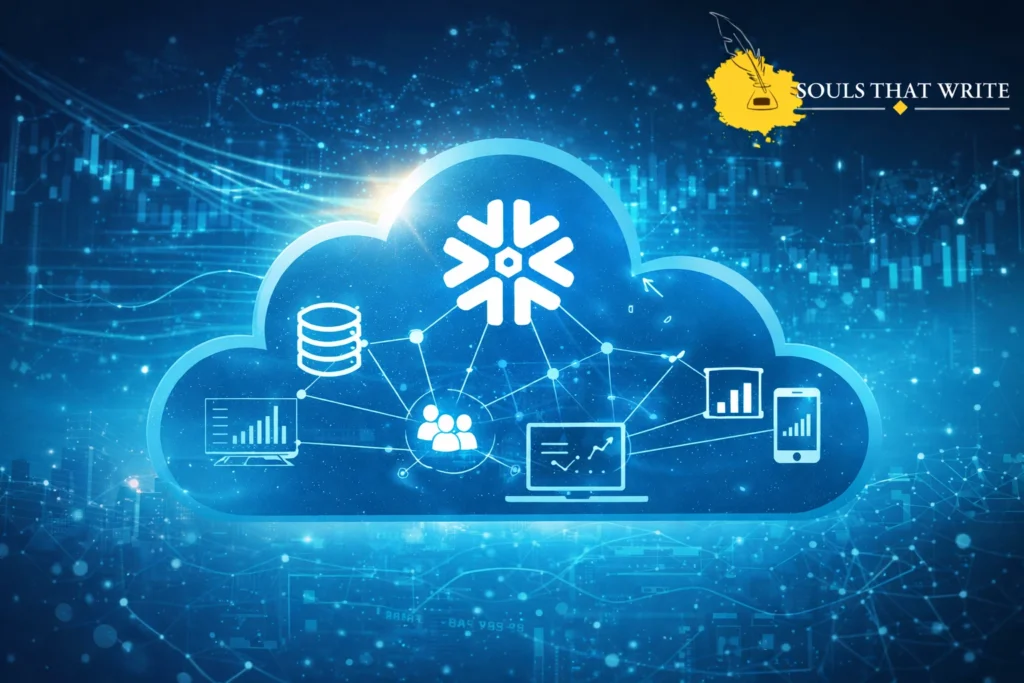
Every enterprise and CIO aims to reach a stage where data is processed freely across departments rather than “confined” to distinct silos. According to a recent study, 66% of businesses had to struggle while exchanging information owing to siloed data, which ultimately affected the progress.
Well, here’s the solution to your problem: Snowflake is a leading cloud data platform that streamlines data collaboration across enterprises. This minimizes errors by eliminating complex data movement and replication.
Snowflake is the cloud data platform that has been the talk of the town among CIOs. With $2.8 billion in revenue, it is set to cross all the marks in 2026 and beyond. Considering the impressive figures and the growing wave of platform-shaped data management for enterprises, it attracted significant attention from Chief Information Officers (CIOs).
So, how do you integrate? By choosing a trusted provider of cloud data platform solutions, you are partnering with Snowflake to leverage and ease data sharing across enterprises.
Read on to explore the power of Snowflake’s capabilities.
About Snowflake
Snowflake was introduced in the market in 2012, and the faces behind the leading platforms are Benoit Dageville, Marcin Zerkowski, and Thierry Cruanes.
Snowflake is among the best cloud-based data platforms that allow organizations to integrate, unify, and analyze data across silos. With Snowflake to the rescue, enterprises can access superior scalability, reliability, and speed through Cloud data platform platforms like AWS, Azure, and Google Cloud.
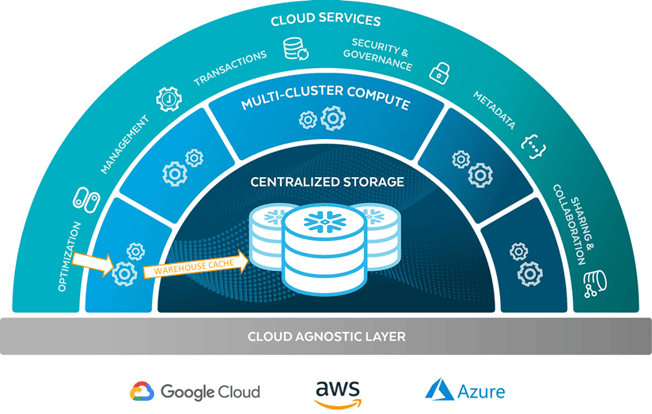
Snowflake is the best cloud data platform built around three core capabilities:
- Cloud services: Snowflake supports ANSI SQL databases for cloud services, ensuring seamless data optimization and management. In addition to providing storage capabilities, Snowflake perfects the handling of stored data security and encryption. Snowflake maintains strong data warehousing certifications like PCI DSS and HIPAA.
- Processing queries: Snowflake’s computing layer consists of virtual cloud data warehouses, allowing users to analyze information.
- Data storage: Snowflake stores data sets uploaded by organizations for processing and analysis. Every step in storing your data is automatically handled, from file size to compression to metadata and statistics.
Snowflake And Data Sharing: Overview of Seamless Data Management
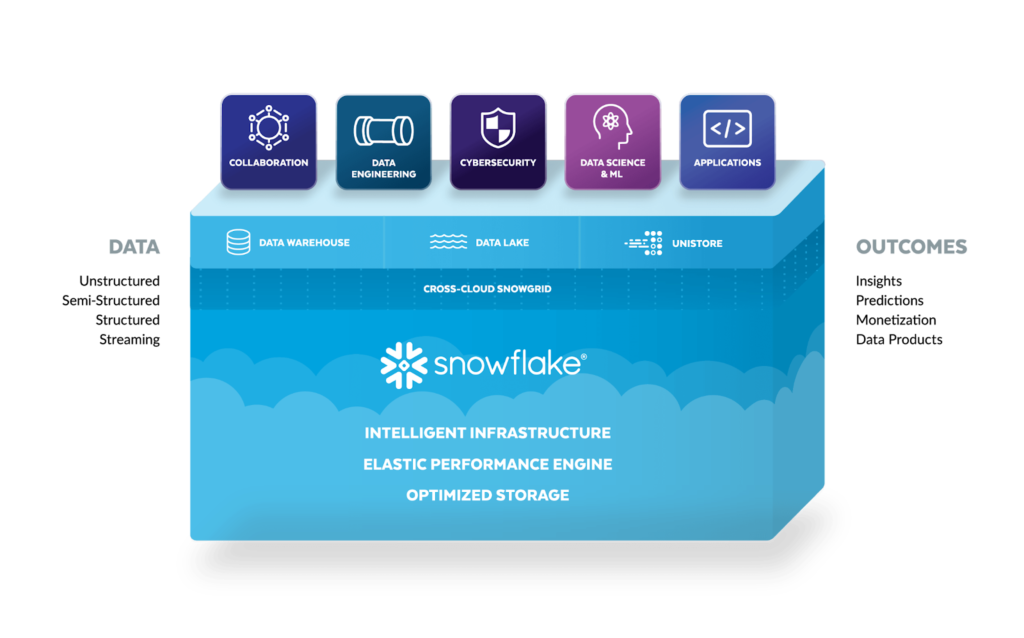
A Snowflake deployment enables seamless and secure data sharing across the entire business ecosystem. With Snowflake’s platform, traditional data ingest, storage and transformation concerns are largely eliminated.
With live, governed, shared data sets, updates can be accessed and received in real time without copying and moving data. Also, proprietary data can be made available securely to partners and customers, enhancing value and facilitating collaboration among departments, business units, and partners.
Benefits of Integrating Snowflake for Enterprise CIOs
The CIO seeks control in data management and not confusion. Using Snowflake, you can control data flows, resulting in instant insights. According to reports, 83% of Fortune 500 companies use Snowflake to manage cloud data. As a result, Snowflake holds a lot of appeal for enterprise CIOs. Here’s an end-to-end breakdown of benefits it brings to the table that makes Snowflake the go-to choice among Enterprise CIOs for seamless data management:
Cost-Efficiency
Snowflake has a cost-effectiveness advantage that attracts enterprise CIOs. The platform architecture reduces overprovisioning costs because resources are more efficiently utilized.
With Snowflake, companies only pay for what they use to manage and analyze large datasets. Scalability and pricing transparency are important to enterprise CIOs for managing and predicting costs.
Separate computing and storage
With Snowflake, compute and storage resources can be scaled independently according to business requirements. Separating these resources allows organizations to allocate computing resources dynamically based on workload requirements, utilize resources more effectively, and save money.
Secure data sharing
Using Snowflake, you can securely share data across organizations, facilitate seamless collaboration, and ensure data privacy. By utilizing features such as Snowflake Secure Data Sharing, users securely exchange live, governed datasets without moving or replicating data.
Compared to traditional methods of sharing data, this eliminates security and unauthorized access risks.
Compliance and security
Snowflake is focused on providing a strong enforcement grid to address CIOs’ concerns regarding data security and risk mitigation. This cloud-based platform combines advanced encryption with access controls and auditing capabilities to protect sensitive information.
With Snowflake in play, CIOs can rest assured that cloud-based platforms comply with the relevant regulatory and compliance standards.
How to share data in Snowflake?
Here are some simple ways that allow users to share data, depending on the type of user:
1. Direct Data Sharing
Direct Data Sharing is a share-to-share or share-to-many model among consumers within the same cloud region.
2. Listings
With listings, providers can make specific datasets more discoverable and understandable by enhancing them with metadata.
3. Marketplace for Snowflake Data
Snowflake Data Marketplace is an online marketplace where organizations can share data for free or for a fee. Data is kept in the provider’s account, so there is no duplication.
Top use cases of Snowflake across the industry
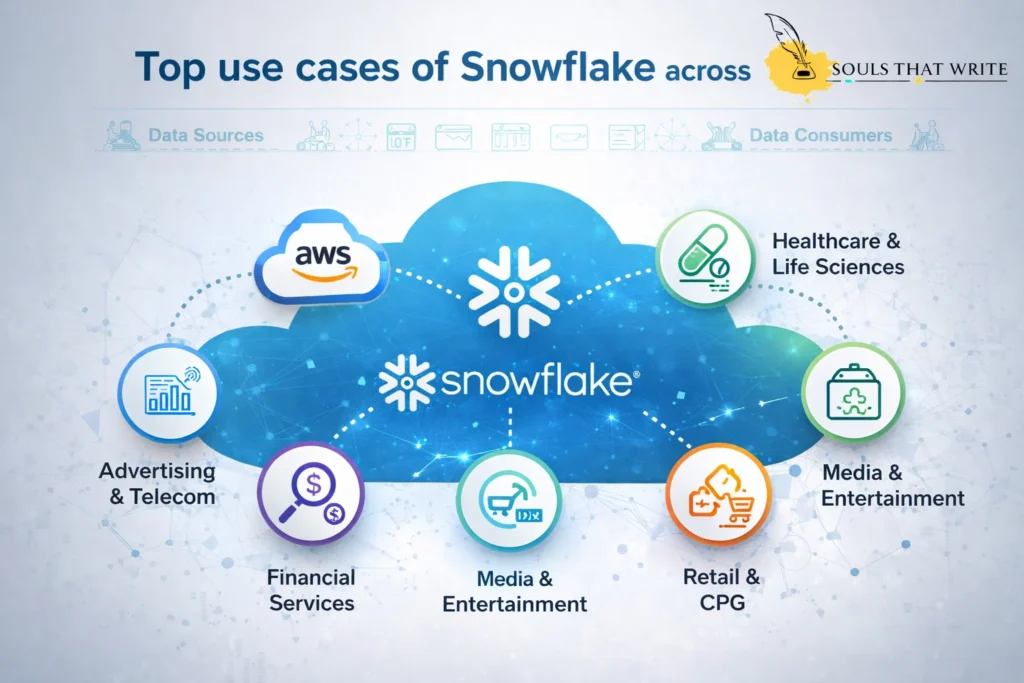
Extracting value from enterprise data and knowledge remains one of the biggest challenges across industries. Snowflake is a cloud-native platform with all the bases covered, which makes it a powerful and transformative platform for top business verticals.
Here are the best use cases of Snowflake for various industries:
Healthcare and Life Sciences
Data security plays a crucial role in healthcare and life sciences and in managing, analyzing, and sharing vast quantities of data. Snowflake provides powerful Al capabilities and ease of use paired with industry-standard security compliance.
Logistics
The logistics industry greatly benefits from Snowflake’s data aggregation and analysis capabilities. With clear visibility, organizations can cut down the costs, boost customer service, and optimize operations while leveraging data-driven strategies.
Environmental, Social, and Governance
ESG sectors benefit tremendously from Snowflake’s data management, analysis, and integration options. Enhanced monitoring and reporting of key metrics, improved compliance with regulatory norms, enhanced transparency, improved governance, and better decision-making can all help them improve.
We can help businesses embrace the power of Snowflake across their segments. With our Snowflake capabilities, you can access empowered data sharing and collaboration across enterprises.
At Souls That Write, we continue to cover technical debates such as software delivery pipelines, AI applications, Meta AI, the Devin AI software engineer tool, and more. With Souls That Write, the tech heads are never out of information.
Explore the hub of technology with Souls That Write, the best blog website in USA.
Conclusion
Snowflake provides a perfect platform for organizations to innovate, grow, and transform in a constantly changing environment. This platform fosters collaboration, provides real-time insights, and utilizes centralized data.
Put an end to inefficient data warehouses and get your hands on the Snowflake revolution with the best cloud service expert, putting Snowflake’s hands-on capabilities at your fingertips. Keep visiting Souls That Write to stay updated with the latest technologies, finance, and all other blogs so you never get outdated with insightful details.